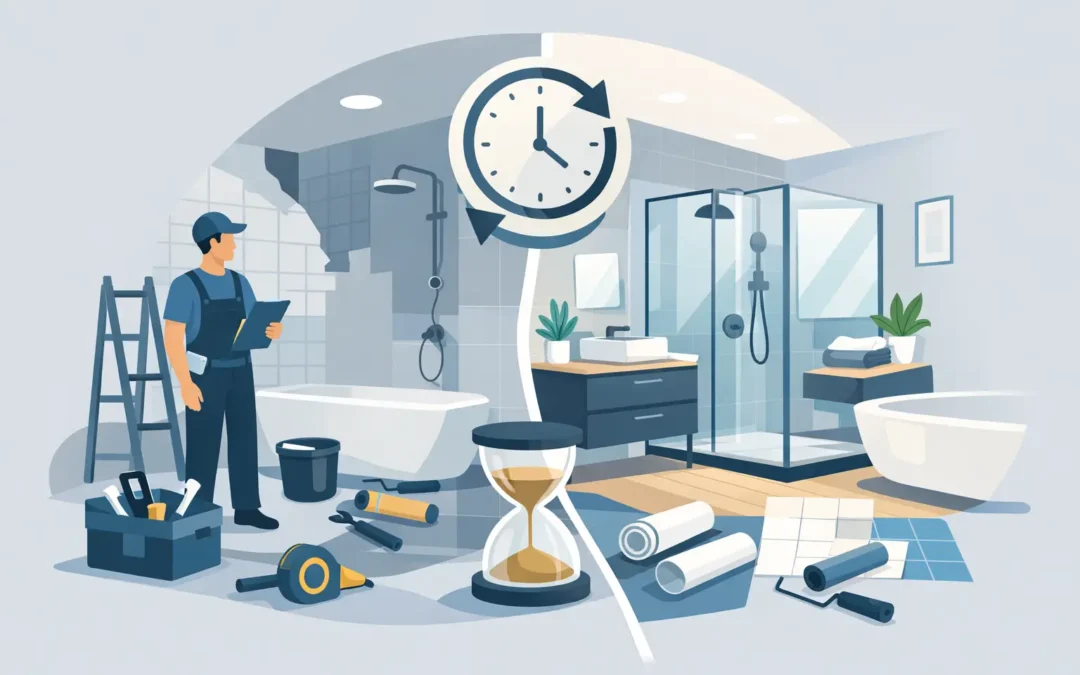
If you are planning a new bathroom, one of the first questions you will ask is how long does a bathroom refurb take. Fair question. Once the old suite is coming out, you want to know how long you may be without a shower, how much disruption to expect, and what can speed things up or slow them down.
For most standard bathroom refurbishments, the work itself usually takes around 7 to 14 working days. That is a sensible ballpark for removing the old bathroom, carrying out first fix work, preparing surfaces, fitting the new suite, tiling, flooring, decorating, and completing final checks. Larger or more detailed projects can take longer, especially where layouts are changing or hidden issues appear once the old fittings are removed.
How long does a bathroom refurb take on average?
A straightforward like-for-like bathroom replacement is usually the quickest option. If the bath, toilet, basin, and shower are staying in roughly the same positions, the plumbing and electrical work is simpler. In many cases, that type of refurbishment can be completed in around one to two weeks.
A more bespoke project often takes longer. If you are moving pipework, building in storage, fitting specialist lighting, installing underfloor heating, or choosing large-format tiles that need careful setting out, it is reasonable to expect a longer programme. That may mean two to three weeks rather than one to two.
The main point is that bathroom refurbishments are rarely just about swapping out visible fittings. Good preparation behind the walls and under the floor matters just as much as the finish you see at the end.
What affects how long a bathroom refurb takes?
The biggest factor is scope. A compact en-suite with simple fittings is a very different job from a full family bathroom with custom joinery, feature tiling, upgraded ventilation, and a revised layout.
Condition matters too. Once the old bathroom is stripped out, problems can come to light that were not obvious before. Rotten flooring, damaged plaster, outdated pipework, poor tanking around a shower, or signs of leaks can all add time. It is better to correct those issues properly than rush the visible finish and leave weaknesses underneath.
Product choice can also affect the programme. Standard items with straightforward installation are usually quicker. Wall-hung toilets, concealed cisterns, recessed storage niches, stone tiles, or made-to-measure units often need more planning and more precise fitting.
Then there is access and coordination. In an occupied home, trades need to work around day-to-day life. In older properties, walls and floors are not always square or level, which means extra preparation. A bathroom on an upper floor may need more care when bringing materials in and taking waste out.
A typical bathroom refurbishment timeline
Every project is different, but the process usually follows a similar pattern.
Days 1-2: Strip-out and first checks
The old bathroom is removed, including sanitaryware, tiles, flooring, and any items that need replacing. This is the stage where the real condition of the room becomes clear. If there is any water damage or structural repair needed, it will usually be identified here.
Days 2-4: First fix plumbing and electrics
Once the room is opened up, plumbing and electrical changes are carried out. This may include relocating pipework, preparing for a new shower valve, upgrading lighting, adding extractor fans, or installing underfloor heating.
Days 4-6: Surface preparation
Walls and floors are levelled and made ready for finishes. In wet areas, proper waterproofing or tanking is essential. This stage is easy to underestimate, but it has a major impact on the longevity and quality of the finished bathroom.
Days 6-10: Tiling and flooring
Tiles are set, grouted, and left to cure as needed. Depending on the tile size, layout, and complexity of cuts, this can move quickly or take several days. Flooring is also installed at this stage if it is not being fitted later in the programme.
Days 10-12: Second fix installation
The new bath, shower, toilet, basin, taps, screens, towel radiators, mirrors, and accessories are fitted. If there is bespoke furniture or made-to-measure storage, careful installation here makes all the difference to the overall finish.
Days 12-14: Decorating, sealing, and finishing touches
Final decorating is completed where required, silicone is applied, fittings are checked, and the room is cleaned and prepared for handover. A good contractor will also test everything properly and make sure the room is ready to use with confidence.
When a bathroom refurb takes longer
There are perfectly valid reasons why a bathroom project might go beyond two weeks.
Changing the layout is one of the most common. Moving a toilet stack or repositioning a shower can involve more substantial plumbing work than clients expect. Likewise, converting a bathroom for improved accessibility, adding stud walls, replacing windows, or upgrading ventilation can all extend the schedule.
Older homes can also be less predictable. You may uncover uneven walls, tired subfloors, or previous work that needs correcting. None of this is unusual, but it does mean realistic planning matters.
Lead times can play a part as well. Even if the installation itself only takes ten working days, the overall project timeline will be longer if tiles, brassware, furniture, or shower screens are made to order or delayed in transit. That is why early product selection is so important.
How to keep your bathroom project on schedule
The smoothest bathroom refurbishments usually start with clear decisions. If the design, layout, and product choices are agreed before work begins, trades can move through the job with fewer interruptions.
It also helps to work with one contractor who can manage the full process. Coordinating plumbers, electricians, tilers, joiners, plasterers, and decorators separately often creates gaps between stages. A single experienced team can sequence the work properly, keep communication simple, and deal with issues as they arise.
Being realistic about contingency is sensible too. Even on well-run projects, bathrooms can reveal hidden issues once stripped back. Allowing a little flexibility in both time and budget reduces stress and helps keep standards high.
If you only have one bathroom in the house, practical planning makes a difference. Some households arrange temporary alternatives with family nearby, while others time the work around holidays or quieter periods. A professional contractor should talk through disruption honestly rather than promising an unrealistically fast turnaround.
Is faster always better?
Not necessarily. Everyone wants the room back in use quickly, but speed should not come at the expense of preparation or finish quality.
A bathroom is a high-moisture space. If walls are not properly prepared, waterproofing is rushed, or fittings are installed without care, problems tend to show up later as leaks, movement, mould, or premature wear. A well-planned two-week refurbishment is usually better value than a rushed job that needs attention again far too soon.
That is especially true if you are investing in better materials or tailored design details. Quality workmanship takes coordination, precision, and the discipline to get the hidden parts right, not just the visible ones.
Choosing the right contractor for the timeline
When asking about programme length, it helps to ask how the contractor works rather than just how quickly they can start. A dependable team should explain what is included, what could affect timing, and how they manage different trades throughout the job.
For homeowners in Aberdeen and Aberdeenshire, that local knowledge can be valuable. Property types vary, older buildings can bring surprises, and clear communication matters just as much as practical skill. At AGM Construction, the focus is on delivering bathroom refurbishments with the right balance of efficiency, finish quality, and tidy, well-managed workmanship from start to finish.
So, how long does a bathroom refurb take? In most cases, around 7 to 14 working days is a sensible guide for the installation phase, with more involved projects taking longer. The best approach is to plan properly, choose your finishes early, and work with a team that values doing the job well. A good bathroom should feel worth the wait every single day you use it.