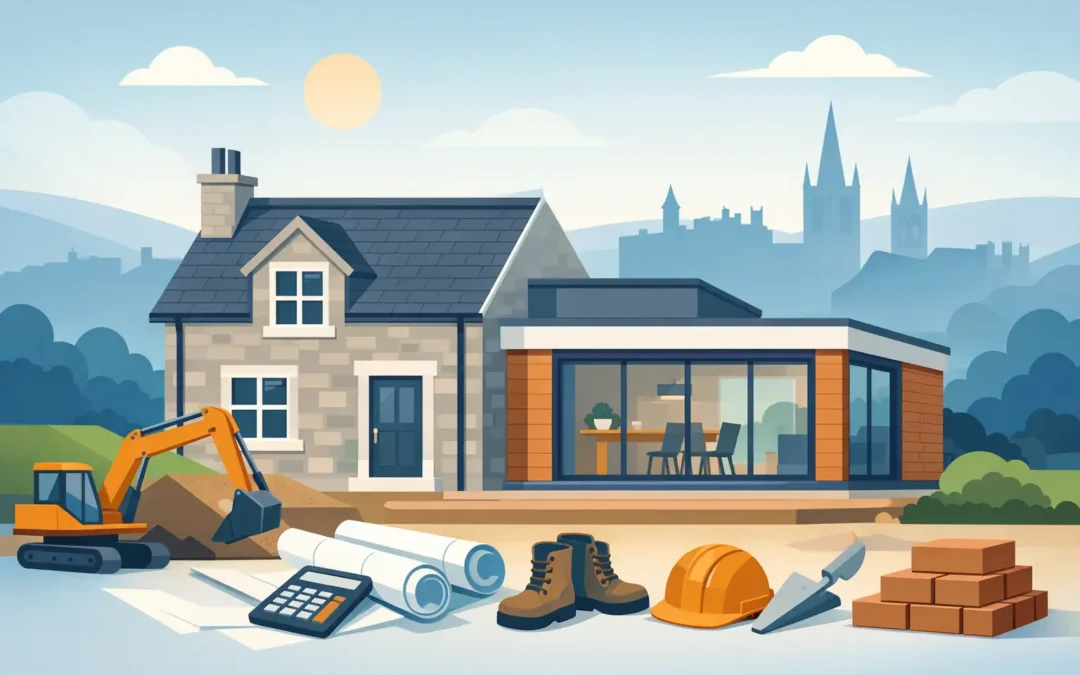
The first question most homeowners ask is simple – how much will it cost? A useful house extension cost guide should give you more than a rough number. It should help you understand what drives the price, where budgets tend to shift, and how to plan an extension that adds real value to your home without unwanted surprises halfway through the build.
In Aberdeen and Aberdeenshire, extension costs can vary significantly depending on the size of the project, the type of structure, the finish you want, and the condition of the existing property. A straightforward single-storey rear extension will sit in a very different budget range from a double-storey addition with structural alterations, bespoke glazing, underfloor heating and a new kitchen fitted as part of the same programme. That is why fixed online averages only tell part of the story.
House extension cost guide – what affects the price most?
The biggest cost factor is usually size, but size on its own never tells the full story. Two extensions with the same footprint can come out at very different prices if one involves complex drainage changes, steelwork, high-end glazing and internal remodelling, while the other is a more straightforward build.
Ground conditions can have a major impact, especially if deeper foundations are required or access for machinery and materials is awkward. In some homes, the hidden work matters just as much as the visible finish. Moving drains, upgrading old electrics, dealing with uneven levels, or tying new structure into an older property can all affect the final figure.
Specification is another key part of any house extension cost guide. Standard finishes keep costs under tighter control, while premium flooring, rooflights, bi-fold or sliding doors, bespoke joinery and upgraded heating systems can push the budget on quite quickly. None of these choices are wrong, but they should be made with a clear understanding of what they add.
Typical extension cost ranges
As a broad guide, a modest single-storey extension may start from around £1,800 to £2,500 per square metre for a fairly standard build. A more design-led extension with larger spans, more glazing or higher-end finishes may sit above that. Double-storey extensions can sometimes offer better value per square metre in structural terms, but they often bring additional costs elsewhere, including staircase changes, more extensive internal works and upgraded services.
If your project includes a new kitchen, bathroom, utility room or open-plan reconfiguration, the total investment will rise beyond the shell construction alone. This is where many online figures can be misleading. They often focus on the extension structure itself, not the wider transformation that homeowners usually want.
For example, if you are extending to create a larger kitchen-dining space, the build cost is only one part of the budget. You may also need to allow for kitchen supply and installation, flooring throughout connected areas, decorating, lighting upgrades and possible changes to doors and windows in the existing part of the house. When all of that is considered together, the total project cost can look very different from the headline rate.
Design choices that change the budget
Shape matters. A simple rectangular extension is generally more cost-effective than one with multiple corners, complex roof junctions or large bespoke structural openings. The more straightforward the form, the more efficiently the build can usually be delivered.
Roof design also plays a part. A pitched roof may suit the property better visually, while a flat roof can be a practical and attractive option in the right setting. Neither is automatically better. It depends on the design, planning considerations, insulation detail and the finish you are aiming for.
Glazing has a noticeable effect on cost as well. Many homeowners want large doors and plenty of natural light, and rightly so. Done well, this can transform the way a home feels. But wide openings often require more structural support, and high-spec aluminium systems will cost more than simpler alternatives. This is one of those areas where balancing ambition with budget is worth doing early.
The costs beyond the build itself
A reliable house extension cost guide also needs to cover the items that sit outside the main construction figure. Planning drawings, structural engineering, building warrant or building control costs, site investigations where needed, and professional design input should all be part of the overall plan.
There may also be practical household costs to think about. Some families stay in the property throughout the works, which can save money but involve disruption. Others choose temporary accommodation during more intensive phases, especially when kitchens are being removed or major structural openings are being formed.
It is also sensible to hold a contingency. Older properties in particular can reveal issues once work starts. Rotten timbers, outdated pipework or walls that are not quite as expected are not unusual. A contingency gives you room to handle the unexpected without placing the whole project under pressure.
Why cheap quotes can become expensive
It is tempting to compare extension quotes on the bottom line alone, but that is rarely the best way to judge value. A low quote may exclude important elements, allow only basic sums for finishes, or leave grey areas around groundwork, structural work or making good to the existing house.
A clear, well-prepared quotation is usually a better sign than a rushed cheap figure. You want to know what is included, what is provisional, and where choices may alter cost. Good communication at this stage often leads to a smoother project later on.
For many homeowners, the real value lies in working with one contractor who can manage the build properly from planning through to finish quality. That matters not only for convenience, but also for cost control. When the project is coordinated well, there is less risk of delay, confusion between trades, or corners being cut to recover time.
How to budget realistically
Start with the outcome you want, not just the square metres you think you need. Sometimes a smaller extension with better internal layout changes can achieve more than a larger footprint. Knocking through into an existing room, adding rooflights, improving storage and redesigning circulation can make a space feel completely different without overbuilding.
Prioritise the elements that will have the biggest day-to-day impact. For one household that might be a larger family kitchen. For another it could be a ground-floor bedroom with accessible shower space, or a garden room that links better to the outside. Once the core goals are clear, it becomes easier to spend in the right places and trim back where the return is lower.
It also helps to separate must-haves from nice-to-haves. If the budget starts to stretch, this gives you options without compromising the heart of the project. Finishes can sometimes be upgraded later. Structural decisions are harder and more expensive to revisit.
House extension cost guide for value as well as spend
Cost matters, but so does what you gain in return. A well-designed extension can improve family life, make better use of the property and add long-term value. The cheapest route is not always the most economical if it leads to a space that feels disconnected, poorly finished or not quite right for how you live.
This is where workmanship and design detail make a real difference. An extension should feel like part of the home, not an add-on. Matching materials, thoughtful layout planning, quality finishes and careful project management all contribute to a result that feels natural and lasts well.
For homeowners in Aberdeen and Aberdeenshire, local knowledge can also be important. Weather exposure, site conditions, property styles and planning expectations can all influence the right approach. A tailored quotation based on your home and your goals will always be more useful than relying on generic national averages.
At AGM Construction, that practical, tailored approach is what helps turn an initial idea into a finished space that works beautifully in everyday life.
If you are at the early stage of planning, the best next step is not to chase a perfect online estimate. It is to have an honest conversation about what you want to achieve, what budget feels comfortable, and how the build can be shaped around both. A good extension starts with clarity, and that is usually where the best value is found.